
Research on Food Insecurity and Insufficiency in the LGBTQ+ Community
By Morgan Flood, Policy Research Coordinator
In this month’s policy blog, CPFB Policy Research reviews past studies and analyzes current data on food insecurity and insufficiency in the LGBTQ+ community. Research around food insecurity and insufficiency among LGBTQ+ people is limited, but what is available clearly indicates that, like other historically marginalized communities, individuals marginalized by gender and sexuality are disproportionately more likely to be unsure where their next meal will come from.
As of 2017 and according to an analysis of a Gallup survey done by the University of California Los Angeles School of Law’s Williams Institute, 26.7% of American LGBT adults had experienced food insecurity in the previous year. This food insecurity rate is double the national average; the USDA’s nationwide food insecurity data indicates that 11.2% of all adults experienced food insecurity in 2017. The Williams Institute study also showed disparities in food insecurity within the LGBT community by sex, age, and race, with individuals identifying as female, younger persons, and persons of color even more likely to be food insecure.
Another Williams Institute study conducted in 2022, using data from the US Census Bureau’s Household Pulse Survey (HPS), showed disparities between the experiences of transgender and cisgender LGBT persons. The HPS is an experimental online tool rolled out in response to the COVID-19 pandemic; therefore, its data is not as robust as other Census surveys like the ACS. However, the HPS provides the best available data on a wide variety of topics and is the only Census Bureau tool that asks in detail about gender identity and sexual orientation.
The HPS includes current experiences of food insufficiency, defined as a household reporting “sometimes or often not having enough to eat in the last seven days.” According to the Williams Institute’s 2022 analysis between July and October 2021, LGBT adults were more likely than heterosexual, cisgender adults to report that their household had experienced food insufficiency. However, transgender individuals were by far the most likely to report food insufficiency at 20%; the rate among straight, cisgender individuals was just 8%.
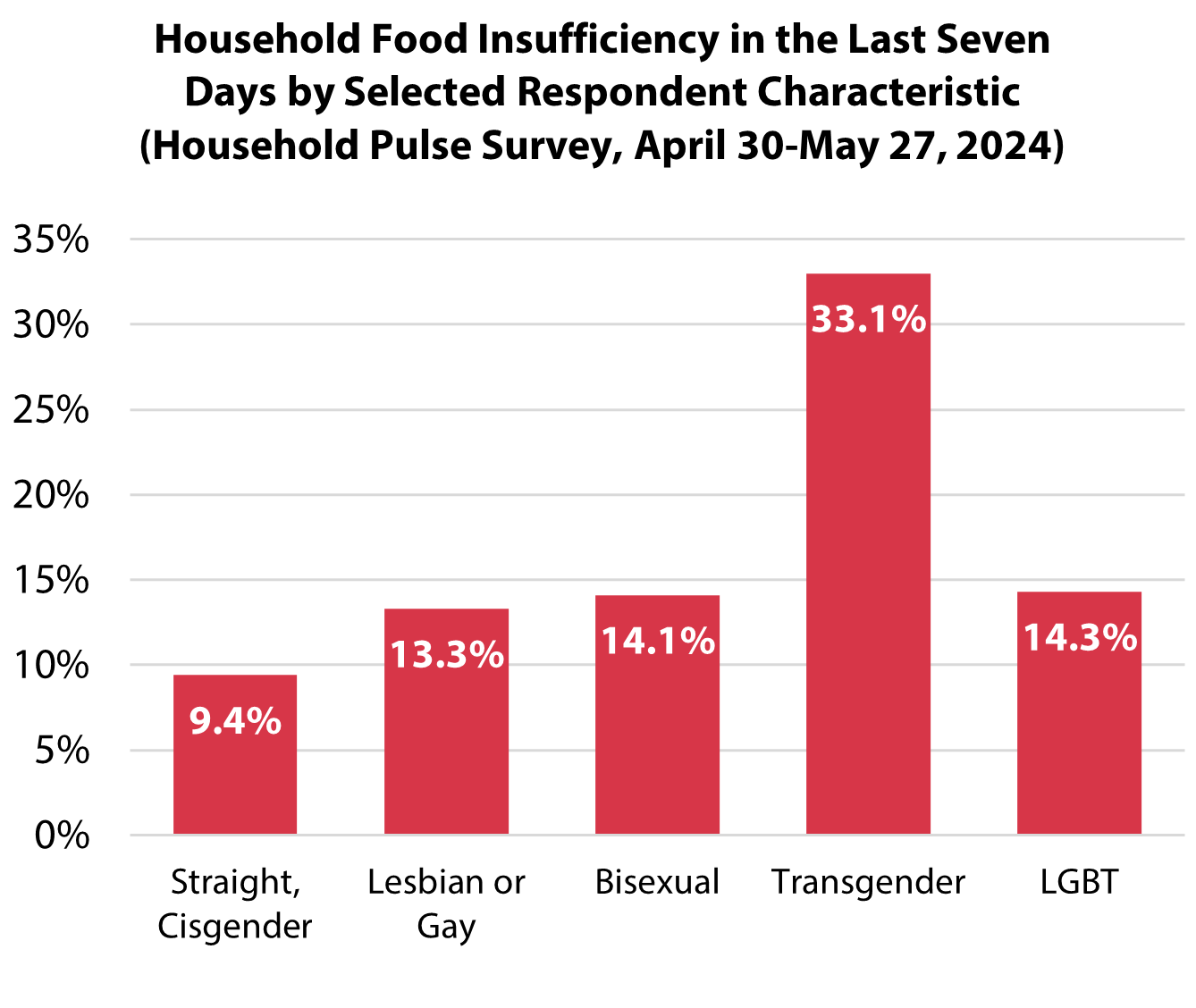
CPFB analysis of a more recent HPS phase aligns with many of the Williams Institute’s findings. LGBT respondents to the HPS, between April 30 and May 27, 2024, had a food insufficiency rate of 14.3%, or about 50% higher than those who did not identify as LGBT (9.4%). Within the LGBT community, transgender individuals had the highest rate at 33.1%, followed by bisexual individuals at 14.1% and gay or lesbian individuals at 13.3%. Compared to 2021, reported rates of food insufficiency are significantly higher for everyone, which aligns with national USDA data and HPS studies showing a dramatic increase in food insecurity and food insufficiency since 2021.
Understanding and addressing these disparities are a key part of our work; the Central Pennsylvania Food Bank has a deep commitment to equity, diversity, inclusion, and belonging, and we know that if we are to end hunger for everyone, we must work to end hunger in the communities that are most likely to face it.