Culturally Familiar Food Guide
By: Emma Wong, RD, LDN
The Central Pennsylvania Food Bank’s Culturally Familiar Food Action Team, in partnership with Penn State REACH, recently published Cultural Cuisines of Central Pennsylvania: A Food Guide for the Charitable Food System. This food guide includes fourteen cultural cuisine food lists detailing foods enjoyed by racially and ethnically diverse communities living in central Pennsylvania.
This policy blog previews a key finding from the report: wait times at food pantries vary significantly across Centre County, with the distribution model in use at the pantry having an important effect on the length of time a service may take.
Wait times result from the intersection of several elements, including each neighbor’s individual decision-making, pantry-level policies, program design choices including and beyond distribution models, and external factors like weather, travel time, or distance. Because wait times are a major component of the overall neighbor experience at food pantries, it is important to understand them and to work to reduce them where possible, despite the complexity of underlying factors.
The guide was created in response to learnings from the Central Pennsylvania Food Bank’s ongoing Community Hunger Mapping work. One finding from this research is that central Pennsylvania is home to a rich diversity of cultures, races, and ethnicities, yet despite this diversity, culturally familiar foods are not always available across the charitable food network. Recognizing this gap, the guide was created to increase cultural awareness and serve as a tool for the charitable food system to tailor their food sourcing to the cultural food preferences of the neighbors and communities they serve.
In this context, culturally familiar foods are meals and ingredients that support the wellbeing of and reflect the traditions, heritage and geographic origins of a specific cultural, ethnic or religious community. They provide a sense of identity, belonging, comfort and nostalgia. They are shaped by history, migration, and other current and world events. To define more succinctly, culturally familiar foods are foods neighbors from diverse cultures like and prefer.
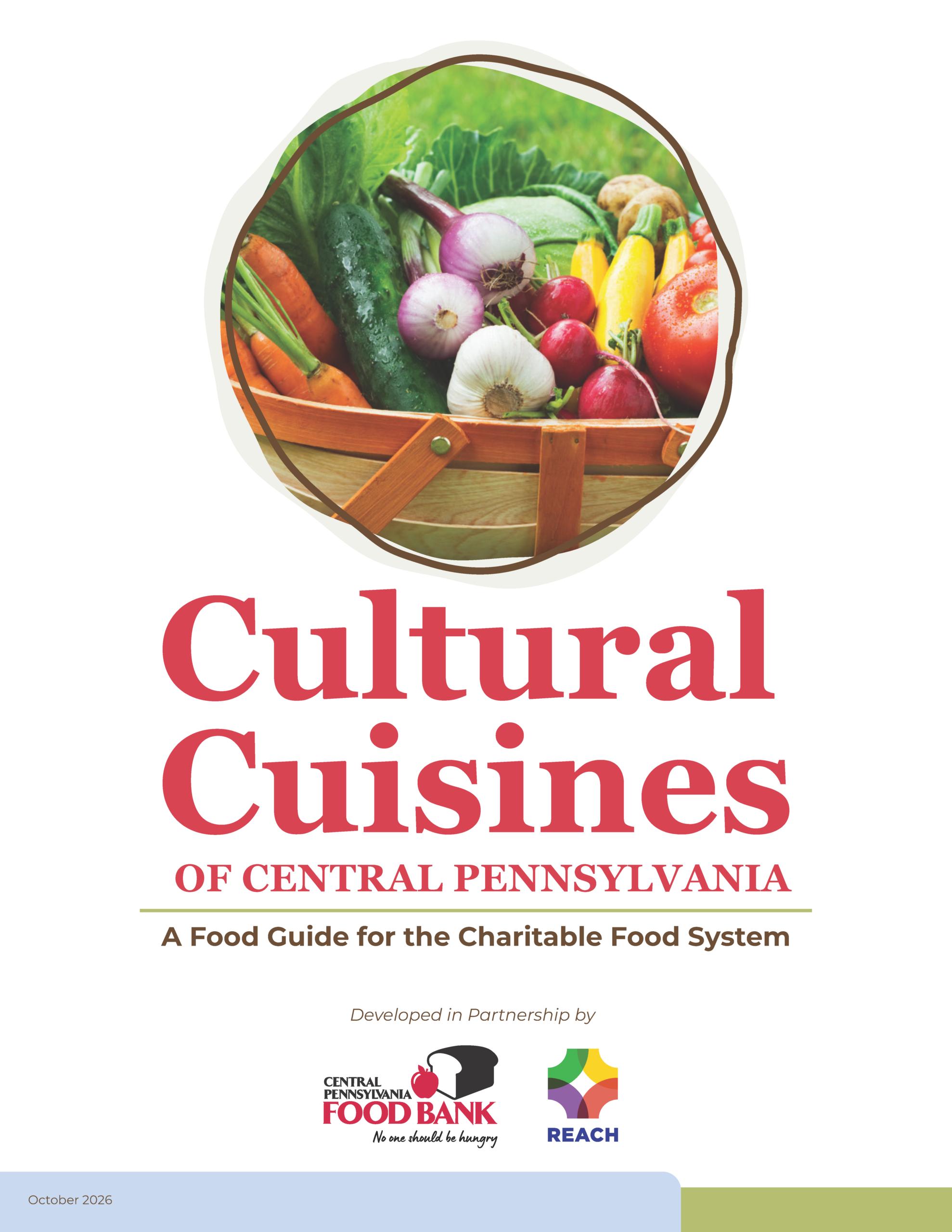
To develop the guide, the Central Pennsylvania Food Bank and Penn State REACH used a multi-layered, data driven approach to curate the included food lists. The fourteen cultural cuisines included in this guide were determined by comparing ancestry data from the United States Census Bureau with data from the surveys used as primary data collection tools for Community Hunger Mapping, which at the time of the project launch included more than 3,700 neighbors living across sixteen central Pennsylvania counties.
Most of the cultural cuisines in the guide are grouped into geographic regions instead of nationality. By grouping cultural cuisines in this way, we were able to represent more countries while focusing on the key overlapping foods across countries and cultures in a particular region of the world. To learn about each cultural cuisine, we conducted qualitative interviews, focus groups and surveys with cultural organizations and neighbors receiving services at food pantries to gather insights and feedback. In all, the team met with nine cultural organizations, gathered feedback from 150 neighbors of diverse backgrounds via surveys and focus groups, and conducted nineteen interviews with individuals.
Our understanding of cultural cuisines was supplemented by in-depth reading, including information gathered through textbooks and cookbooks written by subject matter experts. The items included in the final food lists in this guide were chosen with consideration toward food available within the charitable food system. The food lists are not exhaustive lists of culturally familiar food, but rather collated to create a practical, implementable and educational tool.
Tools and resources included in the final guide include:
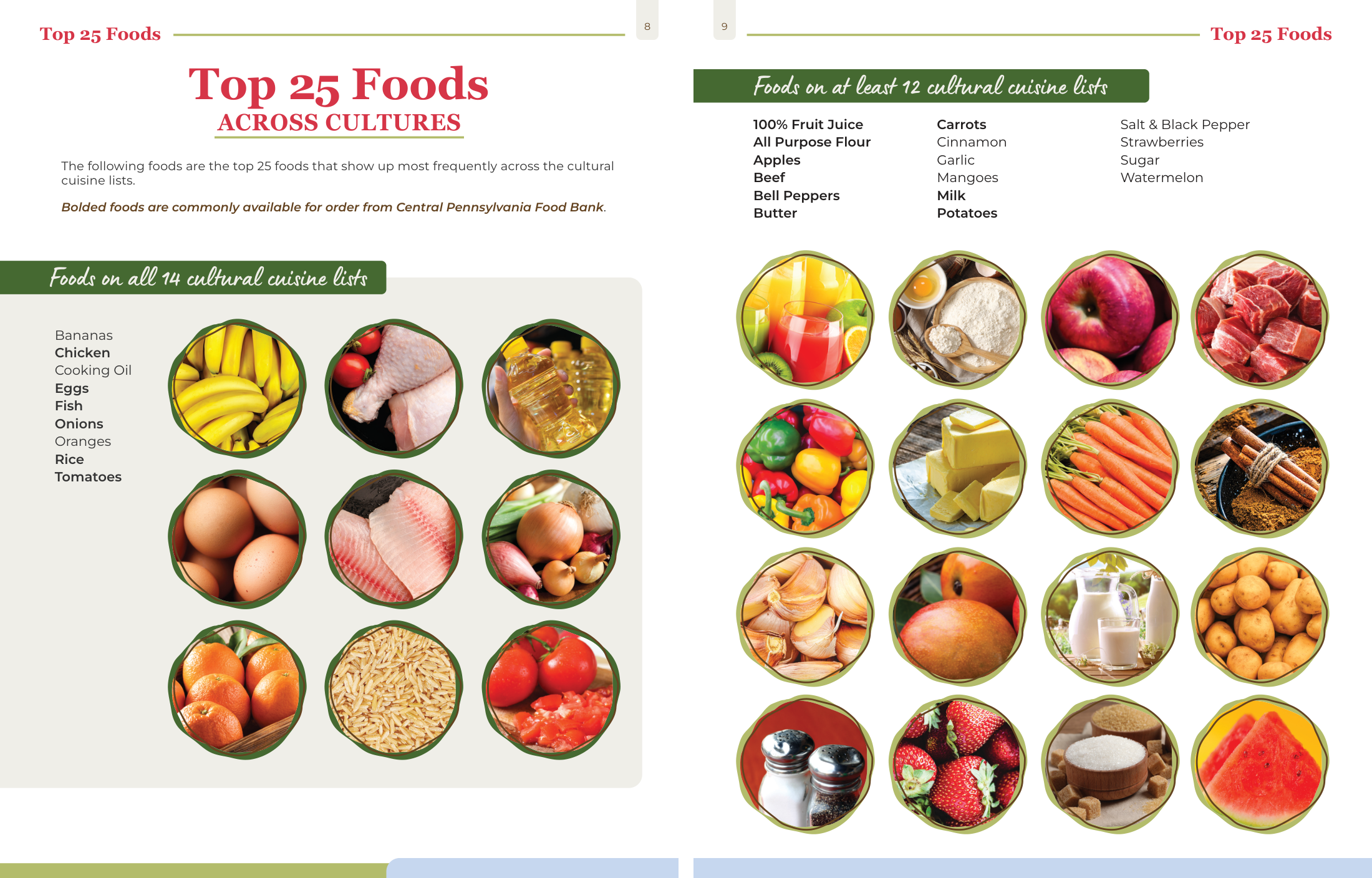
- List of Top Foods Across Cultures, including Top 25 Foods and Top Foods by Food Group
- 14 Cultural Cuisine Food Lists, which detail Preferred Foods, Foods That May Not Be Preferred & Notable Meals
- Notes on Religious Food Observances
- List of Foods & Ingredients Enjoyed During Holidays
To supplement this work, we also created the following resources to support our network:
- Multilingual Vocabulary Guide for the Charitable Food System
- Creating Culturally Welcoming Pantry Guide (forthcoming)
Providing food that food pantry visitors want and enjoy is an important part of caring for our neighbors well. Our hope is that this guide will be informative and empower the charitable food network in central Pennsylvania to increase access and availability of culturally familiar foods. The Central Pennsylvania Food Bank is using this guide to inform our food sourcing decisions, and we encourage agency partners to do the same. We encourage you to check out the full guide at this link; all supplemental resources are available online as well.