2024 Map the Meal Gap Food insecurity Estimates for Central Pennsylvania
By: Morgan Flood, Policy Research Specialist
By By Morgan Flood, Policy Research Specialist
Today, July 28, 2026, Feeding America released updated Map the Meal Gap localized food insecurity estimates for the United States, drawing upon data published the 2024 USDA Household Food Security in the United States report released in December 2025, as well as from the American Community Survey and other federal data sources.
As has been discussed previously on this blog, the Household Food Security report has been discontinued, making the 2025 report the final release in annual USDA research going back nearly thirty years. This policy change makes this year’s Map the Meal Gap release even more important, marking the last one to be built using the gold standard source of national food insecurity data. In this policy blog, CPFB Impact and Policy Research takes a brief peek at the new figures for the Food Bank’s 27-county service territory ahead of a more comprehensive report anticipated this fall.
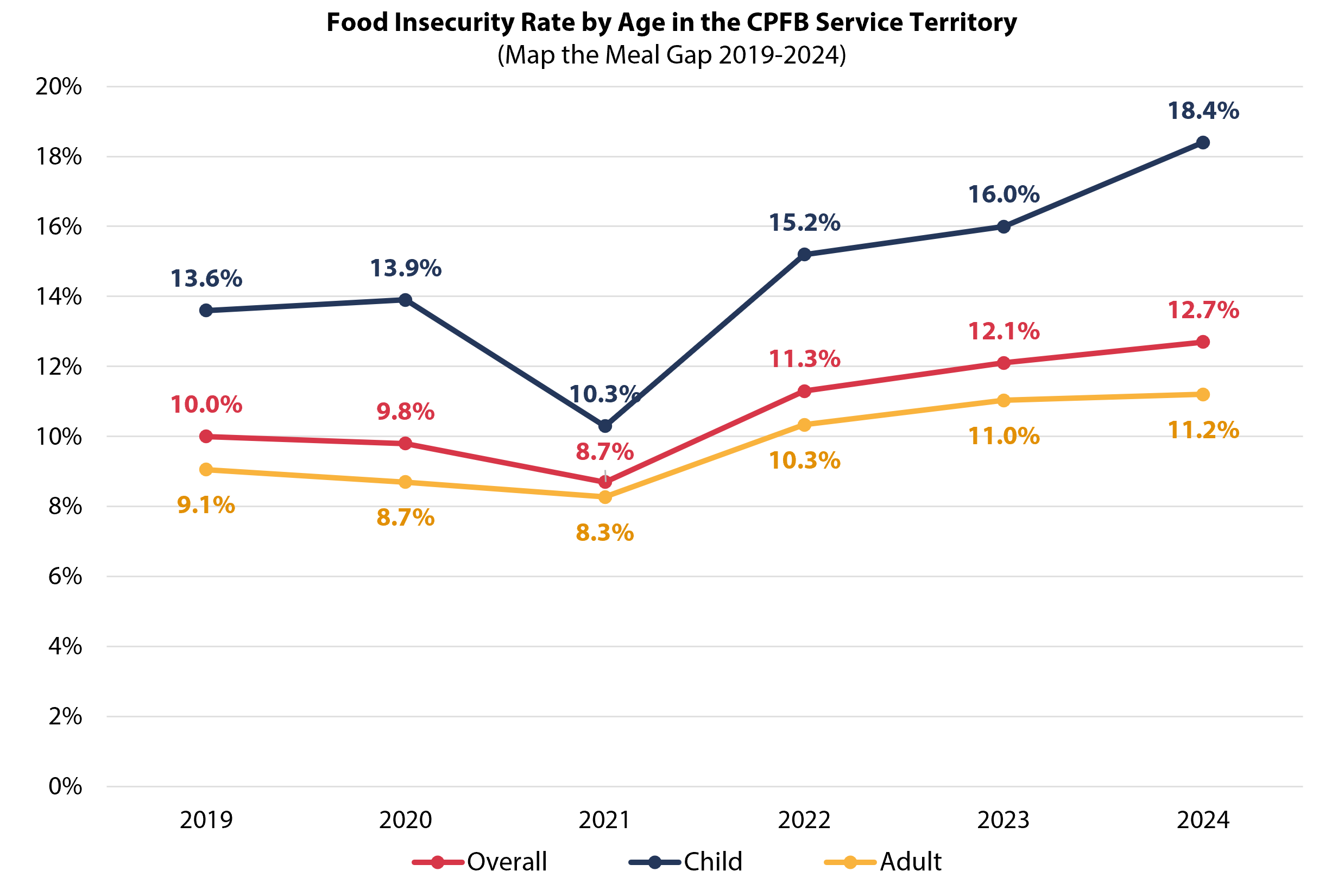
As shown in the chart above, the overall food insecurity rate in the Central Pennsylvania Food Bank’s service area increased between 2023 and 2024, increasing from 12.1% to 12.7%. This is a continuation of a trend observed across the last several years; all-age food insecurity has risen by almost half (46%) since 2021’s recent low rate of 8.7%.
A sharp rise in food insecurity among children drove the bulk of the increase in food insecurity rates across central Pennsylvania between 2023 and 2024, although rates increased across all age groups. Child food insecurity rose more than two percentage points, jumping from 16.0% to 18.4% in just one year, while adult food insecurity rose only slightly from 11.0% to 11.2%. As of 2024, central Pennsylvania’s children were more than 60% more likely to be unsure where their next meal would come from than were adults.
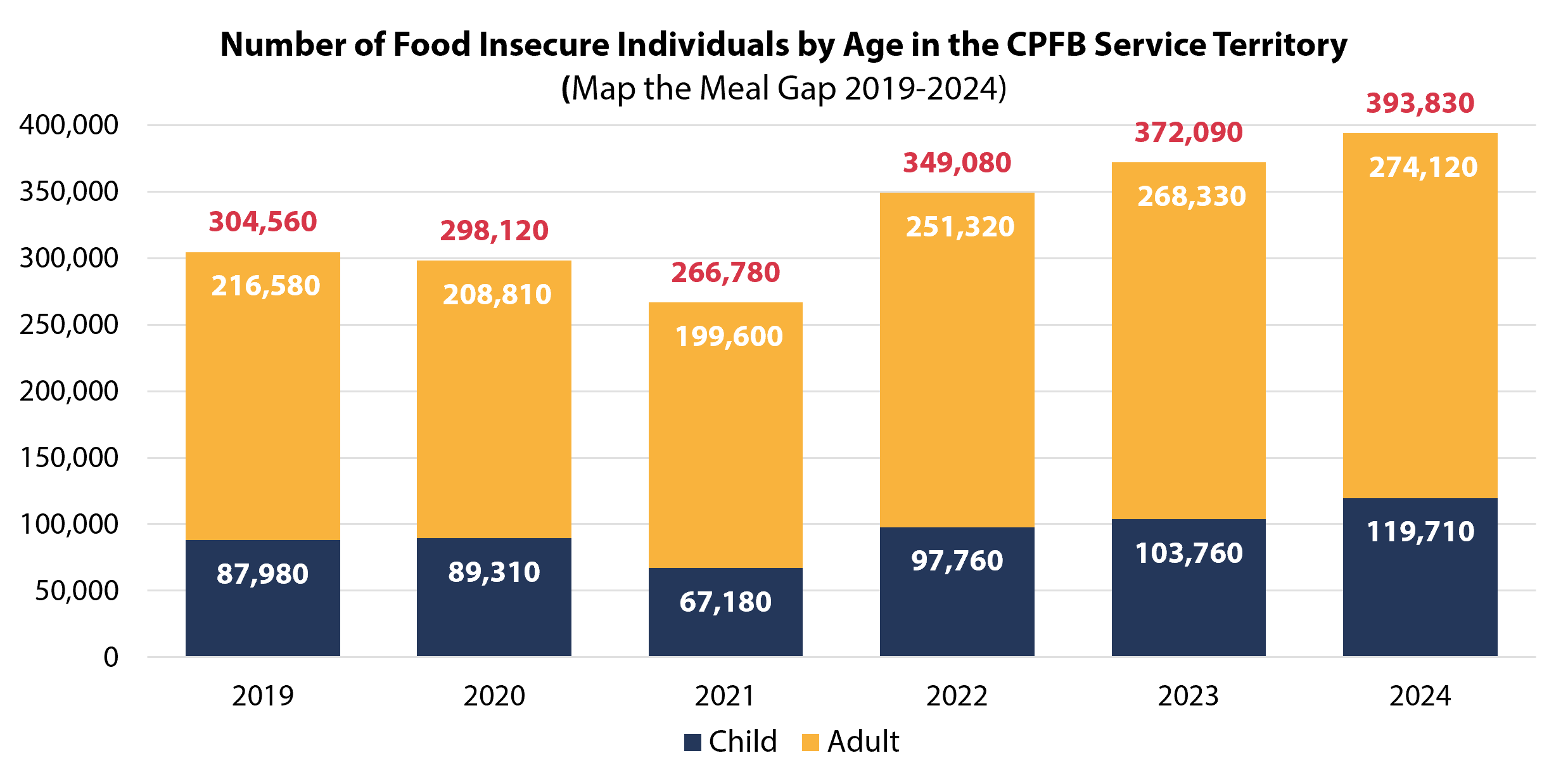
These rising food insecurity rates mean that the number of individuals experiencing food insecurity have also increased dramatically. The above chart shows that the food insecure population of central Pennsylvania as of 2024 stands at more than 390,000 people, with about 120,000 of them being children and youth under the age of 18. Nearly 22,000 people were newly food insecure in 2024, and of these, almost three quarters (73.4%) were children.
Potential causes for the sustained elevated rate of food insecurity observed between 2023 and 2024 include a variety of factors. High grocery prices are one likely contributor; after increasing nearly 19% between July 2021 and June 2024, food at home prices increased another 2% nationally between July 2024 and June 2025 according to the Bureau of Labor Statistics. Prices remaining high put additional strain on already tightly stretched budgets among low-income households, who are the most vulnerable to experiencing food insecurity.
Beyond this, many pandemic-era policies and programs that drove the large decrease in food insecurity seen in 2021, such as SNAP Emergency Allotments and the expanded Child Tax Credit expired in 2022 or 2023 and remained defunct in 2024. The absence of these programs left many households without key supports that had kept them food secure in the recent past. Changes to SNAP and other programs made in the One Big Beautiful Bill Act (OBBA) of 2025 mean that federal policy choices will likely continue to contribute to the widespread and increasing prevalence of food insecurity moving forward.
Because of the cancellation of the USDA Household Food Security report, the extent of food insecurity nationally as well as locally will become more difficult to track after 2024. However, the research and advocacy community is working to ensure that reliable, robust data continues to be generated using alternative sources moving forward. Specific efforts include the Food Security Data Collaborative hosted by the Urban Institute along with work undertaken by Feeding America and many of its member food banks, including CPFB. Independent of the availability of federal data or the future of Map the Meal Gap, CPFB Impact and Policy Research is committed to furthering our understanding of food insecurity and making evidence-based progress toward a central Pennsylvania where no one worries about how they will get their next meal.