
By Morgan Flood, Policy Research Specialist
Chronic health conditions, and particularly those that are related to diet, are a major intersecting issue with food insecurity. Individuals who live in poverty or experience food insecurity are likely to be at additional risk of developing and suffering from a variety of chronic health concerns; according to the CDC, adults who experience food insecurity are two to three times more likely to develop type II diabetes than the overall population and are also more likely to suffer from cardiovascular conditions like heart attack and stroke.
Reasons for the disproportionate impact of chronic disease on low-income and food insecure individuals include but are not limited to a lack of funds with which to purchase nutritious meals as well as the chronic stress brought by challenging circumstances. Indeed, research shows that such factors both contribute to and are worsened by the experience of food insecurity. In this policy blog, CPFB Impact and Policy Research (IPR) considers the prevalence of key diet-related health concerns among central Pennsylvanian food pantry visitors as assessed by the results of surveys conducted across the region.
To better understand the reality of food insecurity and the charitable food network's response to it, CPFB IPR completes Community Hunger Mapping projects that include surveys of food pantry visitors. These neighbor surveys ask participants a number of questions about their personal circumstances, experiences at food pantries, and much more. One question, added to the survey in Fall 2023, asks respondents if they or any other member of their household have been diagnosed with one or more diet-related health conditions. More than 1,800 visitors to 41 different pantries across 12 central Pennsylvania counties have responded to the health or dietary concern question to date. The included counties are Adams, Bradford, Clinton, Dauphin, Franklin, Lycoming, Northumberland, Potter, Snyder, Sullivan, Tioga, and Union; these counties are geographically and demographically diverse and together represent about one third of the population of the CPFB's 27-county service area.
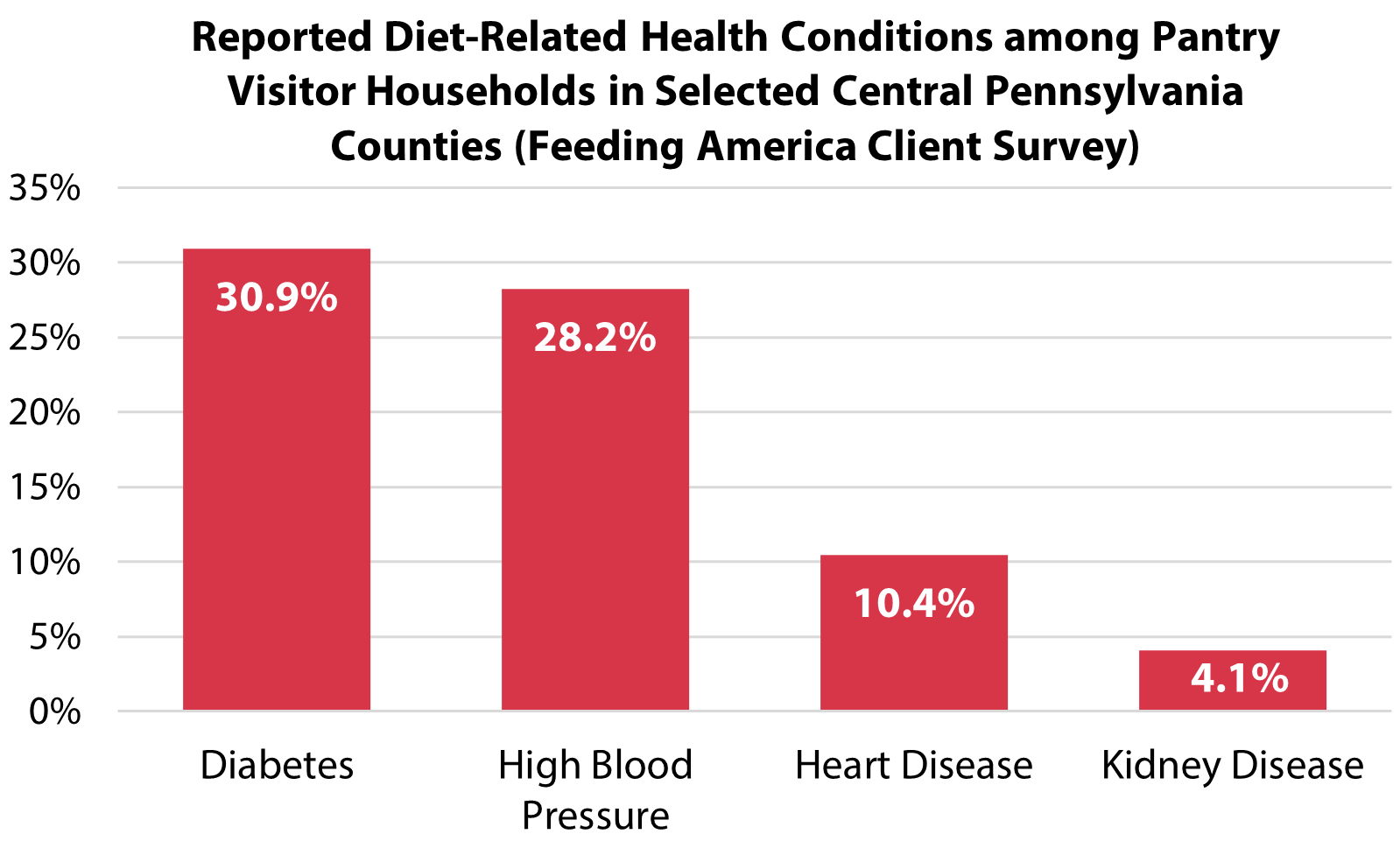
Across the region, a slight majority of pantry visitors (52.7%) said that they or a member of their household had been diagnosed with at least one of four key diet-related health concerns, including diabetes, hypertension, heart disease, and kidney disease. As shown in the chart at right, diabetes was the most commonly reported health concern at 30.9%, followed by high blood pressure at 28.2%. Smaller, but still sizable, proportions of neighbors reported being affected by heart disease (10.4%) or kidney disease (4.1%)
These findings have important implications for the charitable food systems and other community stakeholders. For food banks and pantries, who are already working hard to provide fresh, nutritious foods to their neighbors in need, the high prevalence of diet-related health concerns among visitors places even more importance on efforts to provide produce, whole foods, and other items that work well with chronic disease management or prevention plans. Pantries offering nutrition education services to the neighbors they serve might consider tailoring those services for neighbors who have or are at risk of diet-related health conditions. For other stakeholders, such as health systems and public health advocates, these findings again emphasize the role food insecurity plays as a social determinant of health and the importance of collective action that ensures everyone has access to the food they need to live active, healthy lives. The Central Pennsylvania Food Bank is proud to partner with several of our local health systems, including Penn State Health, Geisinger, UPMC, and Wellspan, on emerging food as medicine initiatives and other innovative partnerships that can help us together end hunger and improve health.